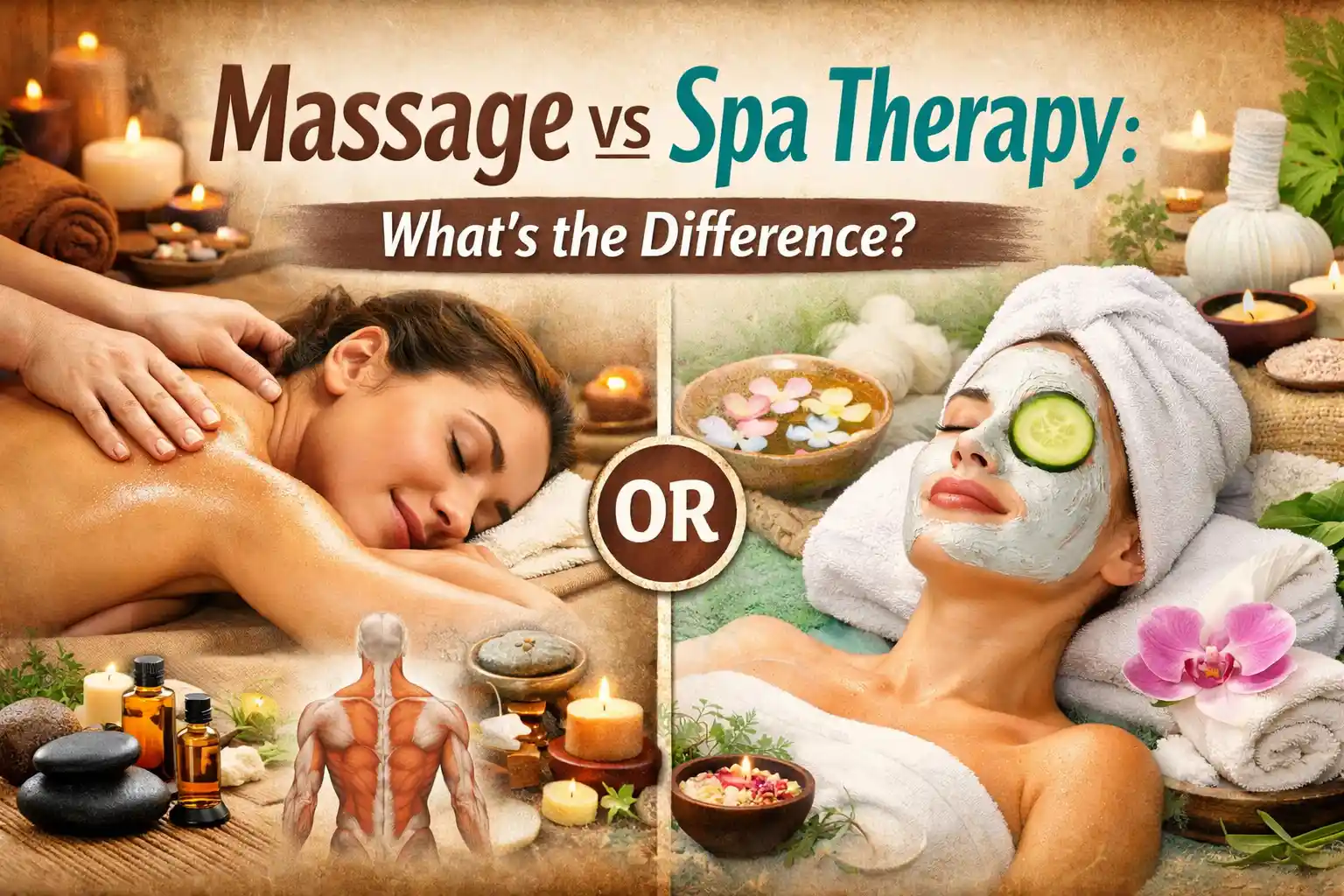
If you’ve ever sought out either relaxation or an alleviation of pain, then the chances are good that you have encountered massage therapy and spa therapy. They seem similar, and they’re occasionally offered in the same location — but they’re not the same experience, and don’t necessarily accomplish the same goals. Knowing the distinction guides you toward the appropriate service for both your body, your goals and your budget.
In this post, we’ll break down spa therapy, massage therapy and, the real difference between the two along with what is the true definition of massage therapy vs spa therapy—in plain language so you know exactly which therapy to choose.
What Is Massage Therapy?
A hands-on treatment, massage therapy focuses on muscles and connective tissues — or in some cases, your joints — for tension relief, increased mobility and to help facilitate recovery. It can be pampering, but is often elected for more specific physical goals — muscle tightness or soreness; joint stiffness; discomfort with posture.
What massage therapy focuses on
Massage therapy usually targets:
- Muscle tension and knots
- Tight shoulders, neck, or lower back
- Post-workout soreness
- Limited movement or stiffness
- Stress stored in the body
Depending on your needs, a therapist may use different styles, such as Swedish massage, deep tissue, sports massage, trigger point therapy, or therapeutic massage blends.
Looking for a premium spa centre in Delhi? Relax, recharge, and feel your best with expert therapies in a calm, hygienic setting.
Who performs massage therapy?
You massage by trained massage therapists who study anatomy, how the body works and what pressure is safe. In some areas, therapists may be licensed or certified (the rules differ from place to place). The thing is, massage generally falls into body-and-results-heavy mode — even when you’re on a plush table in fancy surroundings.
What Is Spa Therapy?
Wellness treatments: Spa therapy is a holistic wellness experience that usually involves treatments to soften the body, calm the mind, and promote healthy skin. While massage tends to be directed at certain muscles and pain points, spa therapy can encompass a range of services from relaxation to beauty to self-care.
What spa therapy can include
Spa therapy may involve:
- Body scrubs and body wraps
- Facials and skin treatments
- Steam, sauna, or hammam sessions
- Aromatherapy experiences
- Hydrotherapy (water-based treatments)
- Reflexology or light bodywork
- Relaxation rituals (tea service, calm music, ambience)
When you go to the spa, it’s usually more about full-body wellness and stress relief than targeted muscle treatment — though many spas offer massage too.
Massage Therapy vs Spa Therapy: The Core Differences
When people talk about massage therapy vs spa therapy, the most significant difference is their focus.
1) Goal: Results vs Experience
- Massage therapy is usually goal-oriented: pain relief, muscle recovery, mobility, tension reduction.
- Spa therapy is usually experience-oriented: relaxation, skin renewal, de-stressing, self-care rituals.
Both can help you feel better—but they help in different ways.
2) Treatment style
- Massage is the practice of rubbing and kneading the body using the hands. Pressure and style are modified according to your body’s requirements.
- Spa treatment might include skin treatment, heat, water, fragrance and relaxation ritual. Touch, when offered at all, can be gentler and more “comforting” (service dependent).
3) Customization
- Massage therapy can be personalized to focus on your “trouble spots” (neck, shoulders, back, hips) — as well as how much pain you’re in.
- There is a wide variation in the preference of spa treatments (scent, oils,alkaline contagion, salt concentration) according to personal preferences and relaxation needs.
4) What you’ll feel afterward
- You might feel looser and less tense, even a bit sore or mildly achy after exercise if deep work was applied.
- When you leave the spa, you’re generally a bit calmer and refreshed (and even “pampered”), with softer skin and a brighter outlook.
Benefits of Massage Therapy
A massage can be a powerful part of your wellness plan — especially when you feel tight or uncomfortable.
Common benefits of massage therapy include:
- Reduced muscle tension and stiffness
- Better mobility and flexibility
- Relief from posture strain (desk job shoulders, neck tightness)
- Support for workout recovery
- Improved relaxation and sleep quality
- Reduced stress-related body aches
Massage can be soothing, but it can also get particular and targeted — especially in any deep tissue or therapeutic sessions.
Want the best spa in Delhi with price transparency? Choose from curated massage packages with clear rates, no surprises—just pure relaxation.
Benefits of Spa Therapy
Spa therapy is ideal when you need a mental reset, deep relaxation, and a sense of renewal.
Common benefits of spa therapy include:
- Reduced stress and mental fatigue
- Relaxation through sensory experiences (aroma, warmth, calm environment)
- Improved skin texture and glow (scrubs, wraps, facials)
- Feeling emotionally refreshed and cared for
- Comfort for the nervous system (especially if you’ve been overwhelmed)
Spa therapy is often chosen for “me time,” special occasions, and total-body relaxation—not just muscle tension relief.
Which One Should You Choose?
The best choice depends on your goal. Here’s a simple way to decide.
Choose massage therapy if you want:
- Relief from muscle tightness or knots
- Reduced stiffness in neck/shoulders/back
- Help with workout soreness or mobility
- Targeted work for posture-related tension
- A functional approach with physical results
If your body feels stiff, sore, or restricted, massage therapy is often the more direct solution.
Choose spa therapy if you want:
- Deep relaxation and stress relief
- Skin nourishment and body care
- A soothing, luxury wellness experience
- Heat/steam rituals for calm and comfort
- A full “reset day” instead of a single treatment
If your mind feels overloaded and you want a calming wellness ritual, spa therapy can be ideal.
Can You Combine Spa Therapy and Massage Therapy?
Yes—and this is where many people find the perfect balance.
A common approach is:
- Start with spa therapy (steam, scrub, wrap, or sauna) to relax the body and warm tissues
- Follow with massage therapy to release muscle tension more effectively
Heat and relaxation can make the body more receptive to massage, particularly if you tend to carry a lot of your stress in your muscles.
If you’re comparing massage therapy vs spa therapy and can’t decide, combining them gives you the best of both worlds: physical release and mental renewal.
What to Expect During Your First Session
First-time massage therapy experience
- You’ll usually share your goals (relaxation, pain relief, tight areas)
- The therapist may ask about injuries or sensitivities
- Pressure is adjusted to your comfort
- Sessions can be full-body or focused (back/neck/shoulders)
First-time spa therapy experience
- You may choose from a menu of treatments
- You’ll often be guided through a calming process (changing area, shower, steam room)
- Treatments may include products like scrubs, oils, or masks
- You’ll usually have time afterward to relax and hydrate
If you’re nervous, both are easier when you communicate clearly. Tell the therapist what you’re comfortable with and what you want from the session.
Common Myths About Massage Therapy vs Spa Therapy
Myth 1: Spa therapy is only “luxury”
While spa therapy is often relaxing and indulgent, it can still support wellness—especially for stress reduction, sleep improvement, and self-care consistency.
Myth 2: Massage therapy has to be painful to work
Not true. Effective massage therapy doesn’t require extreme pressure. The best results come from the right technique and pressure level for your body.
Myth 3: They’re basically the same
They overlap sometimes, but spa therapy is broader and may not focus on muscles, while massage therapy is hands-on bodywork with a more physical goal.
Quick Comparison: Massage Therapy vs Spa Therapy
Massage Therapy
- Focus: muscles and tension
- Best for: pain relief, stiffness, recovery
- Pressure: light to deep (custom)
- Result: improved mobility and comfort
Spa Therapy
- Focus: relaxation, skin, full experience
- Best for: stress relief, rejuvenation
- Intensity: soothing and sensory
- Result: refreshed mind and body, glowing skin
Final Thoughts
The choice between massage therapy vs spa therapy depends on what you need most right now.
- If you want to relieve tight muscles, improve mobility, or address soreness, go with massage therapy.
- If you want relaxation, self-care, skin renewal, and a calming wellness ritual, choose spa therapy.
- If you want complete renewal, combining spa therapy and massage can be the ideal solution.
Whatever you choose, the best results come from clear communication, a skilled professional, and selecting a treatment that matches your goals—not just what sounds popular.