
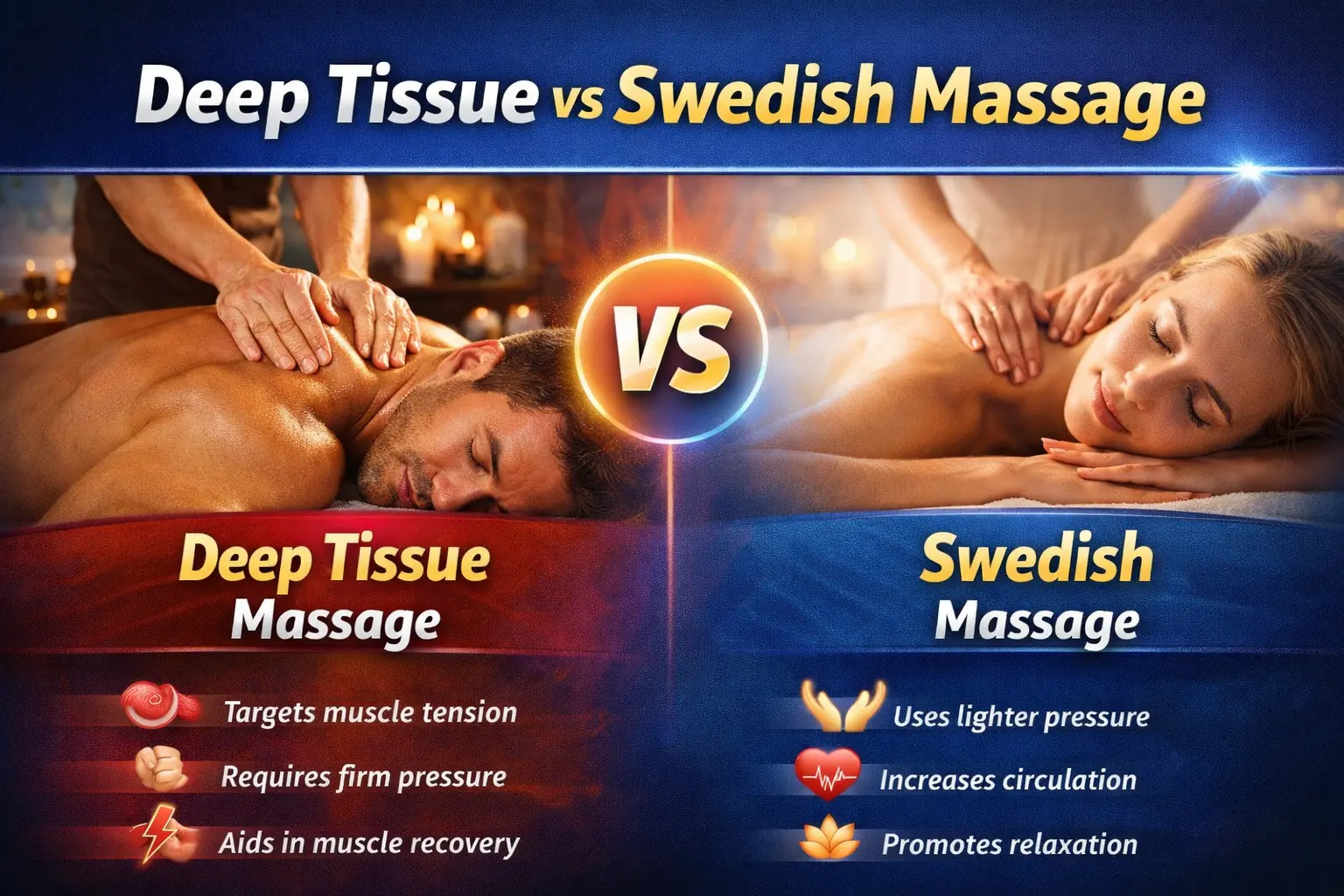
When you’re stressed from work, and any physical pain just won’t let up, it feels totally heavenly to get a proper kneading once in a while. But one common misunderstanding is people often get stuck between Deep Tissue or Swedish Massage. They just don’t know which to choose—both have advantages, both make you feel better in different ways, and in general are beneficial for health. But they are not one thing.
What Is Swedish Massage?
Swedish massage is one of the most traditional forms of massage in the world. Its light and flowing strokes use long, soft movements. The idea is to help relax your whole body, promote blood circulation, reduce ordinary stress levels and finally make sure that overtime gains are minimized wherever possible.
A Swedish session typically includes techniques like:
- Effleurage (smooth gliding strokes)
- Petrissage (kneading and gentle squeezing)
- Friction (small circular movements)
- Tapping or percussion (light rhythmic tapping in some cases)
- Gentle stretching (sometimes included)
It’s usually soothing, not painful, and many people feel extremely relaxed or even sleepy during the session.
Benefits of Swedish Massage
People looking for Swedish massage benefits, in general they are looking for relaxation and overall improvement of their health. Here are the most common advantages:
1) Stress relief and mental relaxation
The benefits of Swedish massage for relaxation lead people over time to develop a calm nervous system. If you’ve been stressed by work pressure, travel fatigue or everyday business responsibilities then this is just what the doctor ordered.
2) Better blood circulation
These gentle toxins promote blood circulation. Your muscles will feel less tired and the heaviness after long hours sitting can be reduced.
3) Reduced muscle tension
A Swedish massage can also eliminate mild tightness in the shoulder, neck or lower back–especially when it’s caused by tension from stress.
4) Improved sleep quality
After a Swedish massage, many people find that they sleep much more soundly. Both the body and mind are still at last.
5) Relief from mild headaches
When the tension is stroked out of sore shoulders and tight neck muscles, chronic headaches may disappear altogether.
Health Benefits of Swedish Massage

Swedish massage offers a far more long-term version of health along with the natural comfort:Relaxation in response to meditation May be of help with stress free relaxation
- In turn, the benefits of health linked to massage therapy are in many cases seen over time (so long as there are regular sessions).May alleviate stress-related sick feelings like fatigue and irritability:
- for pain sufferers Use Swedish massages!
- Works with chronic back and neck problems.
- Preserve your flexibility by keeping your muscles more relaxed Maintains general wellness along with yoga, walking, and drinking plenty of water
Swedish massage may make an ideal starting point if you’re new to massage.
Spa prices in Delhi start from ₹1499, offering premium full body massages, luxury spa therapies, and professional treatments at trusted wellness centers across the city.
What Is Deep Tissue Massage?
Now, let’s address a more critical issue: what is deep tissue massage?
Deep tissue massage uses slow strokes and firmer pressure to reach the deeper layers of muscle and connective tissue (fascia). In doing so, it focuses more on areas like knots, stiff muscles, and chronic tightness that sometimes are troublesome for people.
- This is especially chosen when therapists feel:
- Constant pain in low back/neck/shoulders)
- Tight hamstrings or calves after work outs
- Stiffness due to sitting for long periods of time
- Decreased flexibility in certain areas
- Old injuries with knots
Deep tissue is not supposed to be “unpleasing without asks,” says Ellis, but it may feel deep-especially in places where there are a lot of surrounding muscles and they’re very tight.
Benefits of Deep Tissue Massage
People who search to find out benefits of deep tissue massage usually suffer from pain or constant tightness or long-term tightness. But here are some of the most widely discussed benefits:
1) Deep muscle tension release
For these sorts of deep knots, it is possible to gently release human knots over time. Many eventually feel more relaxed and comfortable in everyday movement.
2) Improved posture support
In India where much work is done on computer screens (IT, desk jobs, work-from home), you seem inclined towards tight chest muscles and an upper back that feels tight. Chronic problems such as that are often relieved using deep tissue massage
3) Better mobility and flexibility
Wider range of motion in shoulders, hips, back etc from reduction of tautness deeper down in muscles
4) Sports recovery and performance support
For people who go to the gym, runners, people who engage in regular exercise, etc., deep tissue massage may help to reduce muscle tightness and speed recovery.
5) Break down scar tissue and adhesions (in some cases)
For certain stubborn problems, the use of deep tissue tools might help to relax tight tissues that form after injuries. You should always tell your history of injury to the therapist.
Health Benefits of Deep Tissue
How can deep tissue work for you? Its main health benefits are frequently associated with pain management and improved function. There are other aspects that can be even more appealing to some people:
- Relief from long-term muscle stiffness
- Stress stored at in the body’s most intractable passages, in the common language
- More balanced movement patterns, because one side of your body may not always be as tight as the other
- Supporting recovery after difficult physical practice or events in several ways.
Note: deep tissue is not a substitute for standard medical treatment. If you have sharp pain, numbness, or serious injuries, it is best to consult your doctor or a physical therapist.
Deep Tissue Massage for Pain Relief: Who Benefits the Most?
The number one reason most people book in for this is deep tissue massage of all things. This is a common choice for:
- Lower-back pain after sitting all day at work or just bad posture
- Neck and shoulder pain (remember that stiff feeling you get from a whole day at the computer?)
- A tight upper back between the shoulder blades as well
- Leg muscles that are tight due to exercise or standing long hours in a row
- Chronic re-experiencing those same muscle knots that keep coming back
After a deep tissue massage, mild soreness for 24–48 hours can occur—the same as after you work out. This is quite normal for many people. Make sure you drink water; also, become more active and take things easy.
Experience affordable luxury at Delhi Russian Spa, offering a top-rated spa in Defence colony where comfort, hygiene, and professional massage services come together perfectly.
Deep Tissue vs Swedish Massage: Key Differences
Pressure and comfort level
- Swedish: light to medium, calming
- Deep tissue: medium to firm, focused and intense in tight areas
Main goal:
- Swedish: relaxation, circulation, general wellness
- Deep tissue: pain relief, stiffness reduction, targeted muscle work
Best for:
- Swedish: stress, fatigue, sleep, mild tension
- Deep tissue: chronic pain, knots, sports recovery, limited mobility
How you may feel after
- Swedish: relaxed, light, refreshed
- Deep tissue: relaxed but sometimes sore, “worked out”
Which One Should You Choose?
Here’s a simple way to decide without overthinking:
Choose Swedish massage if:
- You’re mainly stressed, anxious, or mentally tired
- You want relaxation and better sleep
- You have mild body tightness but not strong pain
- You’re new to massage and want a gentle start
Choose deep tissue massage if:
- You have chronic tightness or knots
- You want deep tissue massage for pain relief
- You do regular workouts or physically demanding work
- You feel stiff and less flexible despite stretching
- You’re comfortable with firmer pressure (with proper communication)
You think the degree of pressure is just right (with good communication)An adept therapist may also blend both – starting with lighter finger work to warm and relax the body, and then progressing to deeper tissue wherever necessary.
What to Expect in Your First Session
No matter which massage you choose, these tips help:
- Communicate clearly: Tell the therapist your pain areas, injuries, and pressure preference.
- Don’t tolerate “bad pain”: Deep tissue can be intense, but it should not feel sharp or unbearable.
- Hydrate: Drinking water after massage supports recovery.
- Rest if needed: Especially after deep tissue.
Who Should Be Careful or Avoid Certain Massages?
Massage is generally safe, but you should be extra careful (and consult a doctor first) if you have:
- Fever, infections, or skin rashes
- Recent surgery or fractures
- Blood clotting disorders or you take blood thinners
- Severe osteoporosis
- Uncontrolled high BP
- Pregnancy (you’ll need a therapist trained in prenatal massage)
Deep tissue, in particular, may not be suitable in some of these cases.
Conclusion
The specific method of massage will depend on your body’s needs. And objectives If gentle relaxation with a little physical exercise to your day is what you are looking for, improved circulation as well as stress relief provided by Swedish massage tends probably suit you best Swedish massage is also good for your health in general. Deep tissue might suit you better if tight muscles, reoccurring knots and pain plagued deep tissue massage work are more to the point. And when done right, there is a strong case for the benefits of deep tissue long after soreness subsides.